

The Ultimate Guide to Hunter Valley Semillon
Discover what Hunter Valley Semillon tastes like, how it is made, when to drink it, how it develops with age and why this distinctive Australian white wine is unlike any other.
Written by Thomas Wines, with expert insights from Andrew Thomas, Winemaker. Andrew has completed more than 40 Hunter Valley vintages.
Last updated: 25 September 2026
-
What is Hunter Valley Semillon?
Hunter Valley Semillon is a distinctive Australian white wine made from the Semillon grape in New South Wales’ Hunter Valley. The classic style is picked at relatively low sugar levels, fermented in stainless steel without oak and bottled at around 10–11% alcohol. The result is a light-bodied, dry white wine with exceptional freshness, purity and ageing potential.
When young, Hunter Valley Semillon typically shows bright flavours of lemon, lime and fresh citrus, with a crisp, focused palate. With time in bottle, it can develop flavours and aromas of toast, honey, lemon curd, beeswax and lanolin while retaining the freshness of its youth. -
This transformation has made aged Hunter Valley Semillon one of Australia’s most celebrated and collectable wine styles.
Thomas Wines was established in 1997 with a clear focus on the Hunter Valley’s two signature varieties: Semillon and Shiraz. Rather than trying to produce every style of wine, winemaker Andrew “Thommo” Thomas chose to specialise in wines that express the vineyards, soils and seasons of the Hunter Valley.
Semillon has remained central to that philosophy. From fresh current-vintage releases to carefully cellared museum wines, this guide explains how Hunter Valley Semillon is grown and made, what it tastes like, how long it can age, what food to serve with it and why vineyards such as Braemore have become so highly regarded.

-
Why is Hunter Valley Semillon unique?
Hunter Valley Semillon combines a warm growing region, early ripening fruit, naturally low alcohol and restrained winemaking to create a white wine found nowhere else. Its defining quality is its ability to taste bright and refreshing when young, then develop remarkable complexity over many years in bottle.
The style can seem surprising for such a warm region. Semillon ripens early in the Hunter Valley and is generally harvested in January, once the grapes have achieved flavour ripeness but while their sugar levels remain relatively low. This allows winemakers to produce dry wines with pure fruit, natural freshness and alcohol levels commonly around 10–11%.
The freshness of Hunter Valley Semillon is not simply a matter of high acidity. Its naturally low pH contributes brightness, precision and stability, helping the wine remain focused as it develops in bottle. The best examples feel crisp and energetic without becoming sharp or austere.
-
Young Hunter Valley Semillon typically displays lemon, lime, lemongrass and subtle floral characters. It is light-bodied and refreshing, but the finest vineyards can also produce surprising intensity, concentration and length.
As the wine matures, its fresh citrus profile gradually develops into flavours and aromas of toast, honey, beeswax, lanolin and lemon curd. These characters emerge naturally through bottle age, even though the wine is traditionally fermented and matured without oak.
This ability to offer two distinct drinking experiences is one of Hunter Valley Semillon’s greatest strengths. A young bottle provides freshness and precision, while a mature bottle offers texture and complexity. Neither expression is more correct; the best time to drink Hunter Valley Semillon depends on which style you enjoy (the most!).

Winemaker's Notes
“I absolutely love young, bright, fresh, crisp and vibrant current-vintage Hunter Valley Semillon. But I think it’s fair to say that the style the Hunter Valley is most famous for around the world is our bottle-aged Semillon.”
Andrew Thomas
Winemaker, Thomas Wines
-
The History of Hunter Valley Semillon
The Hunter Valley’s commercial wine history dates to 1828, when George Wyndham established Dalwood Vineyard near Branxton. Now recognised as Australia’s oldest continuously operating commercial vineyard, Dalwood provides the historical reference point for the Hunter Valley wine industry’s bicentenary in 2028.
Semillon was introduced to Australia in the early 1830s through James Busby’s collection of European grapevine cuttings and soon became established in the Hunter Valley. The variety proved particularly well suited to the region’s warm, humid climate and developed into one of its most important white grapes.
For much of its early history, the variety was not labelled Semillon. Hunter Valley examples were sold under names including Hunter River Riesling, Hock, White Burgundy and Chablis, reflecting the naming conventions of the time rather than the grape variety or winemaking style. -
During the twentieth century, generations of Hunter Valley growers and winemakers refined a distinctly regional expression of Semillon. Producers including Maurice O’Shea and several of the Hunter’s longstanding winemaking families demonstrated that these delicate young wines could develop extraordinary flavour and complexity in bottle. Later advances in refrigeration, temperature-controlled fermentation and stainless-steel winemaking helped preserve even greater fruit purity and freshness.
As the Hunter Valley approaches 200 years of commercial winemaking, Semillon remains its most distinctive white wine. Vineyard practices and equipment have evolved, but the foundations of the classic style remain simple: carefully grown fruit, relatively early harvesting, gentle handling, fermentation without oak and enough time in bottle for the wine’s full character to emerge.

Winemaker's Notes
“The wines we make from Braemore are a beautiful each-way bet. They have a slightly higher level of intensity and concentration than you might expect to see in young Hunter Valley Semillon, making them deliciously approachable as young wines without compromising their longevity.”
Andrew Thomas
Winemaker, Thomas Wines

-
Braemore Vineyard and Hunter Valley Semillon
Braemore Vineyard is a six-hectare Semillon vineyard planted in 1969 on Hermitage Road in Pokolbin. Its old vines, distinctive soils and proven ability to produce both approachable young wines and long-lived cellar releases have established Braemore as one of the Hunter Valley’s benchmark Semillon vineyards.
The vineyard sits on a narrow strip of deep, sandy loam alluvial soil formed by an ancient watercourse. This band of soil runs for approximately three kilometres beside Hermitage Road and also includes other highly regarded Semillon sites, including Tyrrell’s HVD and the historic Trevena Vineyard. Andrew Thomas describes it as one of the Hunter Valley’s “Grand Cru” strips of Semillon soil.
Braemore’s pale, powdery soil is free draining, allowing vine roots to penetrate deeply while preventing excess water from collecting around them. Semillon does not perform well with what Thommo calls “wet feet”, making these soils particularly well suited to the variety. Their reflective surface also directs light into the vine canopy, assisting even ripening.
Thomas Wines first purchased a small parcel of Braemore fruit for the 2000 vintage. The quality of those early wines convinced Thommo that the vineyard was something special, and Thomas Wines gradually secured more fruit as demand for Braemore Semillon grew. By the mid-2010s, the winery was purchasing approximately 75% of the vineyard’s annual crop.
When owners Ken and Christine Bray decided to sell, Thomas Wines purchased Braemore in December 2017. Securing the vineyard protected the future of what had become one of the most important wines in the Thomas Wines range. Ken Bray continues to help manage the site, maintaining a relationship with the vineyard that stretches back to the early 1990s.
The name Braemore combines the surnames of Ken Bray and Christine’s maiden name, Moore. Today, the vineyard is divided into five main sections, each contributing a different element to the finished wine. Together they produce the intensity, balance and longevity that have become the signature of Braemore Semillon. -

Winemaker's Notes
“Ken and I had an unwritten understanding that if he ever considered selling the vineyard, he would give me the first opportunity to purchase it. When we finally became the owners in December 2017, I was incredibly proud to have skin in the game, particularly with one of the Hunter Valley’s iconic vineyards.
Just as importantly, Braemore had arguably become the most important label within our range. If the vineyard had gone to somebody else, Braemore was gone, because you can’t make Braemore from anywhere else but Braemore.”
Andrew Thomas
Winemaker, Thomas Wines

-
How is Hunter Valley Semillon made?
Classic Hunter Valley Semillon is made with minimal winemaking intervention. The aim is to preserve the natural character of the grapes and allow the vineyard and vintage to speak clearly in the finished wine.
Harvest timing is critical. The fruit must be ripe enough to move beyond herbaceous flavours such as cut grass and tomato leaf, but still retain its natural freshness and relatively low sugar levels. This balance allows Hunter Valley Semillon to achieve pure citrus flavour and phenological ripeness at alcohol levels commonly around 10–11%.
At Thomas Wines, Braemore Semillon is hand-picked and gently whole-bunch pressed to maximise the purity and delicacy of the juice. Gentle handling also limits the extraction of phenolics from the grape skins, which can otherwise make the wine feel bitter, tannic or astringent. -
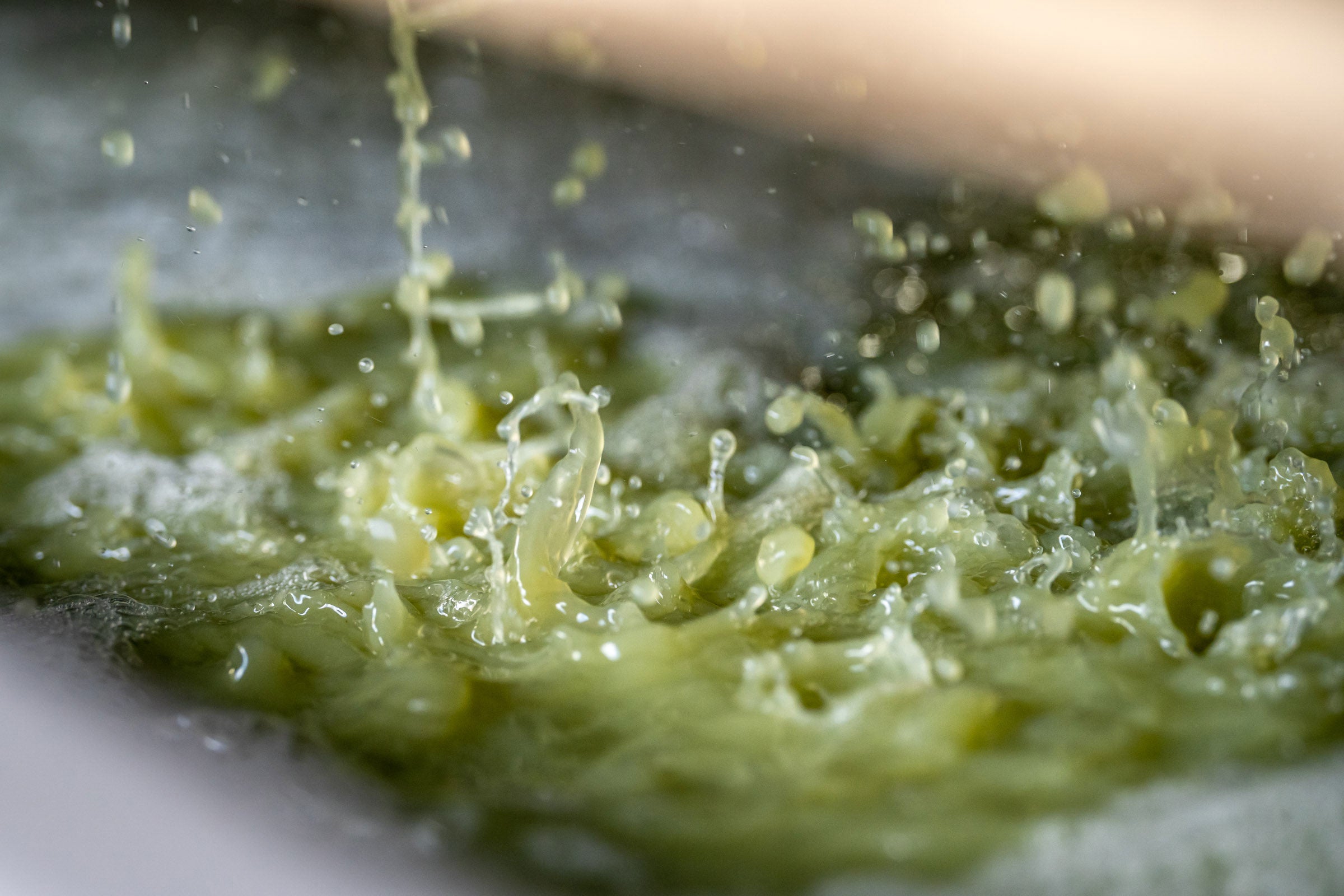
The juice is transferred to stainless-steel tanks and cold settled, allowing the grape solids to fall to the bottom. The clear juice is then racked into a clean tank and inoculated with a neutral yeast chosen for its reliable fermentation and minimal aromatic influence. Temperature-controlled fermentation preserves the vineyard’s fresh citrus character.
After fermentation, the wine may remain on its fine yeast lees for several months, particularly in leaner vintages, to build subtle texture. It does not undergo malolactic fermentation and is made without oak, ensuring that its flavour comes from the fruit, the vineyard and the gradual development that occurs in bottle.
Hunter Valley Semillon is usually bottled within four to six months of harvest. As Thommo explains, it is one of the purest expressions of “grape to glass”, which is why vineyard quality is so important: there is very little in the winemaking process to disguise the character of the fruit.
-
Young vs Aged Hunter Valley Semillon
Hunter Valley Semillon can be enjoyed at every stage of its development. Young and mature Semillon offer very different drinking experiences, and the best time to open a bottle depends on the style you prefer. The rate of development will also vary according to the vineyard, vintage and storage conditions.
Current vintage to three years
Young Hunter Valley Semillon is light-bodied, crisp and refreshing, with flavours of lemon, lime, lemongrass and fresh citrus. This is the best stage for drinkers who enjoy purity, brightness and a clean, focused finish.
Four to seven years
The wine begins its transition from youthful freshness to bottle-aged complexity. Citrus flavours remain prominent, while subtle notes of toast, beeswax and lemon curd start to emerge. Thomas Wines releases its Cellar Reserve Braemore Semillon after approximately six to seven years, when it has begun to show mature character but still retains the brightness of the current release. -
Eight to fifteen years
At this stage, Hunter Valley Semillon becomes more layered and expressive. Toast, honey, lemon curd, lanolin and beeswax become more pronounced, while the wine retains freshness and length. Thommo’s preferred drinking window for Braemore is often around 10 to 12 years, when the wine is fully mature but still exceptionally bright.
Fifteen to thirty years and beyond
Semillon from the best Hunter Valley vineyards and vintages can continue developing for decades. The flavours become deeper, more savoury and more complex, yet well-cellared bottles can retain remarkable energy. Exceptional vintages of Braemore have the structure to age for 30 or 40 years, although correct cellaring becomes increasingly important over such long periods.

-
How Long Can Hunter Valley Semillon Age?
Well-made Hunter Valley Semillon can comfortably age for 10 to 20 years. Wines from exceptional vineyards and strong vintages may continue developing for 30 or 40 years, making the style one of Australia’s longest-lived white wines.
Ageing potential depends on the quality of the vineyard, the balance of the wine, the vintage conditions and how the bottle has been stored. Not every Semillon needs decades in the cellar, and many modern examples are deliberately made to offer greater flavour and approachability when young. -
Thomas Wines has bottled Braemore Semillon under screwcap since 2004. This provides a consistent seal and has allowed the wine to retain exceptional freshness as it matures. Museum bottles from the strongest vintages remain remarkably youthful, with Thommo describing the 2013 Braemore as a wine likely to outlive him.
For long-term cellaring, store Hunter Valley Semillon somewhere dark with a stable temperature, ideally between approximately 12°C and 15°C. Avoid heat, direct sunlight and frequent temperature changes. A temperature-controlled wine cabinet is the most reliable option if you do not have a suitable cellar.
If you prefer not to cellar wine yourself, look for a Cellar Reserve release that has already been matured under controlled conditions. Thomas Wines holds back a portion of Braemore each vintage and releases it after six to seven years, once its bottle-aged character has begun to emerge.

-
What Food Pairs with Hunter Valley Semillon?
Hunter Valley Semillon is an exceptionally versatile food wine because of its freshness, low alcohol and citrus-driven character. The best pairing depends on whether the wine is young and vibrant or has developed richer bottle-aged flavours.
Young Hunter Valley Semillon
Young Semillon is particularly well suited to fresh seafood and lighter dishes. Its citrus flavours and crisp finish complement oysters, prawns, crab, sashimi, sushi and simply prepared white fish. It also works well with fresh salads, goat’s cheese, grilled vegetables and dishes featuring lemon, herbs or light spice. -
Aged Hunter Valley Semillon
As Semillon develops toast, honey, beeswax and lemon-curd characters, it can accompany richer and more savoury food. Try it with lobster, salmon, roast chicken, pork, creamy seafood dishes, mushroom-based dishes or mature cheeses. Its freshness helps balance richness while its bottle-aged complexity complements deeper flavours.
A simple rule is to pair younger Semillon with fresh, delicate food and mature Semillon with dishes that have more texture and richness. However, both styles retain enough freshness to remain versatile at the table.
-
How Should Hunter Valley Semillon Be Served?
Young Hunter Valley Semillon is best served chilled at approximately 8–10°C. Mature Semillon can be served slightly warmer, at around 10–12°C, allowing its toast, honey, beeswax and citrus characters to become more expressive.
Avoid serving Semillon too cold. Very low temperatures can suppress its aromas, flavours and texture. If the bottle has been stored in a household refrigerator, allow it to sit out for a few minutes before pouring. -
Use a standard white-wine glass with enough room for the aromas to develop. Young Semillon generally does not need to be decanted, although an older bottle may benefit from a short period in the glass after opening. Mature bottles should be handled carefully and checked for any sediment before serving.
Once opened, Hunter Valley Semillon can remain enjoyable for several days when resealed and refrigerated. Its natural freshness often allows it to develop gradually rather than fading immediately.
-
How Is Hunter Valley Semillon Different from Other Semillon?
Semillon is grown in several wine regions, but the Hunter Valley produces a particularly distinctive expression. Classic Hunter Valley Semillon is dry, light-bodied, low in alcohol, fermented without oak and driven by pure citrus flavours. Its ability to transform through bottle age is central to the style.
In Bordeaux, Semillon is commonly blended with Sauvignon Blanc. Dry white Bordeaux is often fuller in body and may be fermented or matured in oak, while the sweet wines of Sauternes use botrytis-affected Semillon to produce concentrated flavours of honey, apricot and spice. -
Australian Semillon Sauvignon Blanc and Sauvignon Blanc Semillon blends are usually more aromatic and fruit-forward. Sauvignon Blanc contributes tropical, herbal and grassy characters, while Semillon adds citrus flavour, texture and structure. These blends are generally intended to be enjoyed young.
Hunter Valley Semillon is typically made entirely from Semillon and relies on vineyard character, freshness and time in bottle rather than aromatic blending varieties, residual sugar or oak. The result is a dry white wine with a style and ageing profile that is uniquely associated with the Hunter Valley.
-
Frequently Asked Questions About Hunter Valley Semillon
How do you pronounce Semillon?
Semillon is commonly pronounced “sem-ee-yon” in Australia. The two ls are not pronounced individually.
Is Hunter Valley Semillon dry or sweet?
Classic Hunter Valley Semillon is a dry white wine. Although Semillon can be used to produce sweet wines in regions such as Sauternes, the traditional Hunter Valley style is fermented to dryness.
Is Hunter Valley Semillon aged in oak?
Classic Hunter Valley Semillon is fermented and matured in stainless steel without oak. Its toast, honey and beeswax characters develop naturally through bottle age rather than barrel maturation.
Why does aged Hunter Valley Semillon taste toasty if it has no oak?
The toasty flavours develop through the slow evolution of the wine in bottle. Over time, fresh citrus characters become more complex, producing aromas and flavours often described as toast, honey, lemon curd, beeswax and lanolin.
Can you drink Hunter Valley Semillon young?
Yes. Young Hunter Valley Semillon is crisp, citrus-driven and refreshing. Many modern examples are made to be enjoyable on release while retaining the balance and structure required for long-term ageing.
How long can Hunter Valley Semillon be cellared?
Well-made Hunter Valley Semillon can age for 10 to 20 years. Wines from exceptional vineyards and vintages may continue developing for 30 or 40 years when stored correctly.
What is the typical alcohol level of Hunter Valley Semillon?
Hunter Valley Semillon is generally low in alcohol, with many examples bottled at approximately 10–11% alcohol by volume.
What food goes with Hunter Valley Semillon?
Young Hunter Valley Semillon pairs particularly well with oysters, prawns, crab, sushi and simply prepared fish. As the wine develops with age, it can accompany richer dishes including lobster, salmon, roast poultry, pork and mature cheeses.
What makes Braemore Vineyard special?
Braemore is a six-hectare Semillon vineyard planted in 1969 on deep, free-draining sandy loam alluvial soils beside Hermitage Road in Pokolbin. It produces wines with unusual intensity and approachability when young, together with the structure and balance required to age for decades. -
Explore Thomas Wines Hunter Valley Semillon
Thomas Wines produces a range of Hunter Valley Semillons that express different vineyards, vintages and stages of development. Explore the freshness and purity of current-vintage Semillon, compare individual vineyard sites or discover the complexity of a Cellar Reserve wine that has already been carefully matured.
Braemore Semillon sits at the heart of the range. It is available as a current release, as a limited Cellar Reserve release and through the Braemore Semillon Subscription for those who would like to receive regular deliveries and follow the wine’s development over time.
You can also experience Hunter Valley Semillon at our cellar door in Pokolbin, where our seated tastings explore the influence of vineyard, soil, vintage and bottle age.


